

How can Leaders Unlock the Power of Workplace Connection to Boost Team Performance?
Most Leaders Overlook The One Factor That Drives Performance
〰️
Most Leaders Overlook The One Factor That Drives Performance 〰️
The quality of workplace relationships matters!
Focusing solely on metrics, deadlines, and deliverables can make results appear successful—yet teams may still feel disengaged, unmotivated, or unsupported. Research shows that authentic connection is the key to sustaining performance and well-being.
The Problem
Many leaders assume that productivity depends entirely on skills, strategy, and goals. In reality, neglecting connection can lead to burnout, low morale, and turnover, even among top performers.
Dr. Robert Waldinger, leading one of the longest-running studies on adult development and happiness, found that:
Strong relationships are the greatest predictor of life satisfaction, health, and resilience.
In the workplace, this translates to trust, recognition, psychological safety, and support, which drive both well-being and performance.
Connection isn’t about hosting parties or creating friendships on demand—it’s about enabling people to be themselves, feel valued, and grow.
Learn more about the study here: Harvard Health: The Good Life
At Fit to Lead, the Well-Being / Connection pillar emphasizes that leaders who nurture authentic relationships:
Boost engagement and commitment
Reduce stress and turnover
Foster innovation and collaboration
Enable employees to grow personally and professionally
Even small actions, repeated consistently, create a culture where connection thrives.
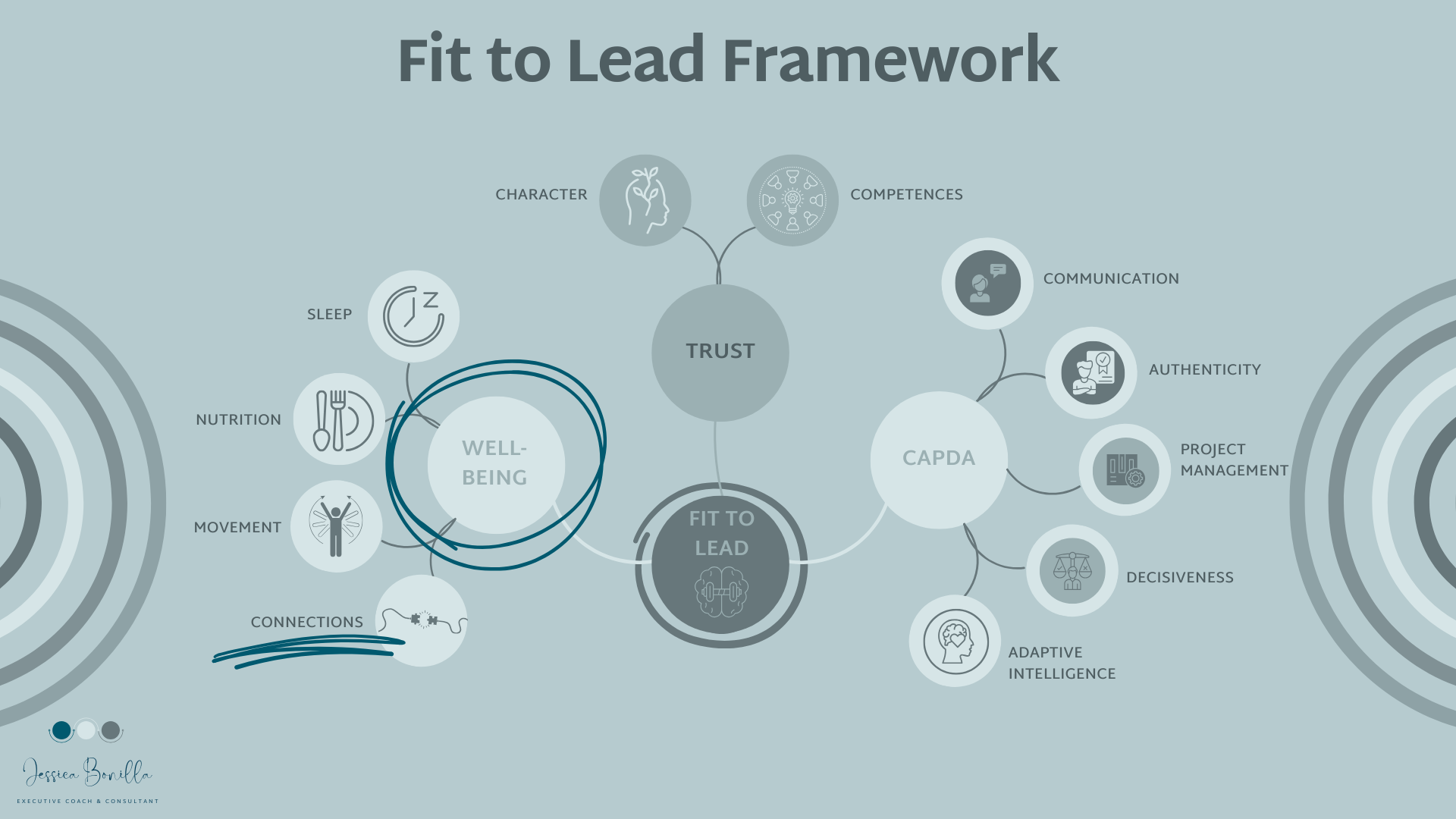
The quality of your Connections influences your performance.
Your Free Reflection Guide
To help you apply these principles, I’ve created a free downloadable guide: “Reflective Questions for Leaders: Improve Connection and Performance in Your Team”
Use it to explore questions like:
When have you felt truly fulfilled at work? What conditions were present?
Did you have the freedom to share ideas or raise questions?
What moments of collaboration led to your “aha” insights?Final Reflection
Download your guide here.
💡 Most of these tools are free and simple to apply. Even small daily actions—like asking thoughtful questions, recognizing contributions, or encouraging open dialogue—make a lasting impact. What matters most isn’t flashy gestures—it’s the small details of daily life at work that shape the type of leader you become and the impact you can achieve.
Try This Practical Steps For Leaders
Remember, it's the small, consistent actions that build a culture of connection:
Encourage Open Communication – create spaces where team members can share ideas and concerns without fear of judgment.
Recognize and Appreciate Contributions – acknowledge achievements, big and small, consistently.
Promote Flexible Work Environments – allow employees to mix and match responsibilities with other life priorities rather than forcing a rigid 9–5 schedule.
Support Professional Growth – offer opportunities for learning, mentoring, and skill development.
Now, it is time to buckle up and:
Download the reflective guide and explore the questions with your team.
Share your insights and see which actions improve connection and engagement.
Watch Thursday’s video for practical examples of how connection transforms a team.
On Friday, I’ll share actionable steps extracted from this newsletter you can implement immediately.Recognition is not optional — it’s leadership in action.
Which step will you try first?
〰️
Which step will you try first? 〰️
Stay Fit to Lead!